An intermediate article about repair cafés, spare parts, sustainability, and why more people are trying to fix things instead of replacing them.
Основний текст
Читай текст у контексті й натискай підсвічені слова, щоб відкрити переклад, транскрипцію та дії зі словником.
Vocabulary:10(✓0+0-10)
knownlearningnew
For many years, buying a new product felt easier than repairing an old one. If a phone battery became weak or a lamp stopped working, people often decided to . Today, that habit is slowly changing in many cities.
is the idea that objects deserve a second life when possible. It does not mean keeping everything forever. It means asking a practical question before something: can this be fixed safely, affordably, and without too much trouble?
One reason for the change is cost. New devices, furniture, and clothes are not cheap. If a is available, a repair can the life of an item for months or years. For families , that can make a real difference.
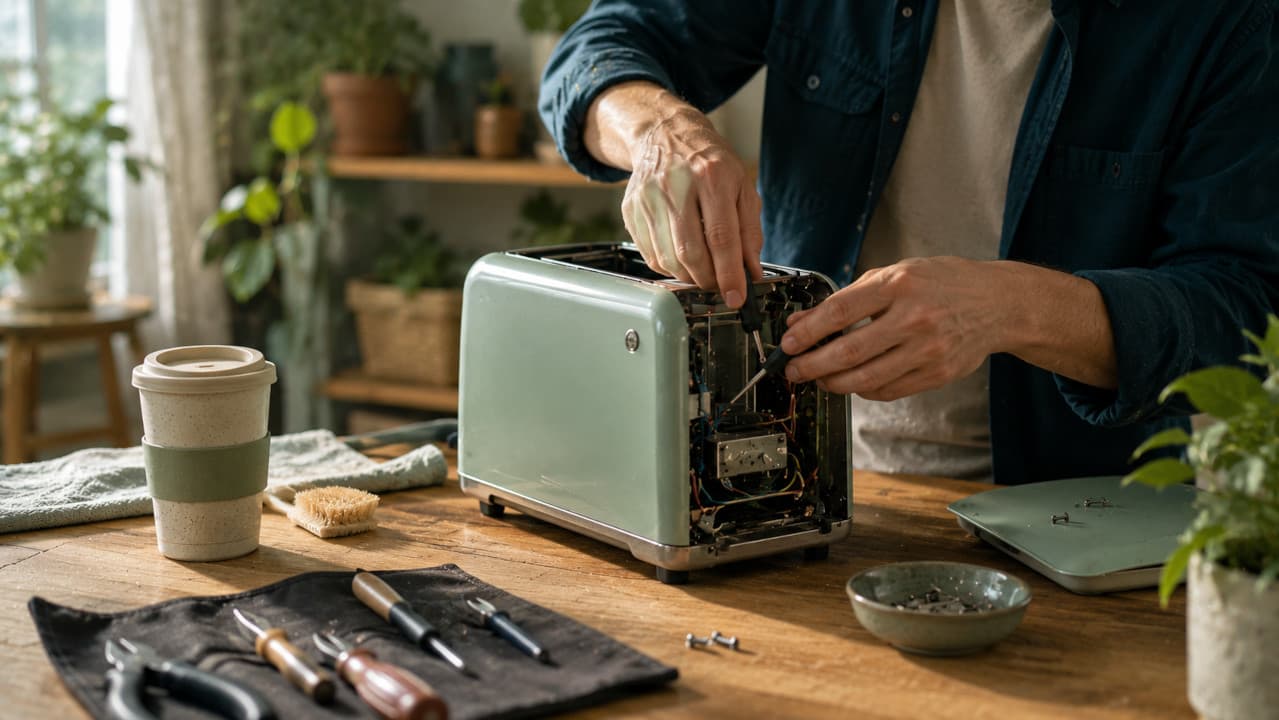
Another reason is the environment. Every broken toaster or chair has materials inside it: metal, plastic, wood, fabric, or glass. When people fix things, they and slow down the demand for new materials. The effect of one repair is small, but many small repairs can matter.
have helped make the idea feel social rather than difficult. Volunteers sit with visitors and show them how to solve simple problems. A person may arrive with a broken radio and leave with a working radio, a new skill, and a different view of ownership.
There are limits, of course. Some products are hard to open, and some companies do not sell . A can also make repair decisions confusing. Still, the rise of repair culture shows that people are questioning the idea that convenience should always win.
In the end, repair is not only about saving money. It is about patience, care, and a small feeling of control. When you fix something, you learn how it works. You also learn that not every problem requires a new purchase.
Repair culture also changes how people think about quality. If a product is impossible to open or repair, buyers may start to see it as less attractive. A cheap object is not always cheap if it breaks quickly and must be replaced again and again.
Some schools and community groups now teach basic repair skills. Students learn how to sew a button, change a bike tire, or understand a simple electric problem. These skills are small, but they can reduce dependence on constant shopping.
The movement has a social side too. At a repair event, people often talk while they work. Someone explains how a device is built, another person shares a story about an old chair, and a volunteer shows that practical knowledge can be friendly rather than intimidating.
Businesses are also responding. Some brands now sell replacement parts, publish repair guides, or design products that are easier to open. They do this partly because customers ask for it, and partly because sustainability has become part of their public image.
Still, repair culture should not become another pressure on ordinary people. Not everyone has time, tools, or confidence to fix things. The point is not to blame consumers, but to make repair a realistic option when it makes sense.
Вправи
Перевірте розуміння тексту, ключову лексику та зміст уроку після читання.
Після перегляду визнач, чи правильне твердження
Визначте, чи відповідає кожне твердження статті.
Щоб виконувати завдання, увійдіть в акаунт.
Вибери правильний варіант відповіді
Виберіть правильну відповідь.
Щоб виконувати завдання, увійдіть в акаунт.
Обговорення
щоб коментувати, лайкати відповіді та скаржитися на коментарі.






Обговорення
щоб коментувати, лайкати відповіді та скаржитися на коментарі.