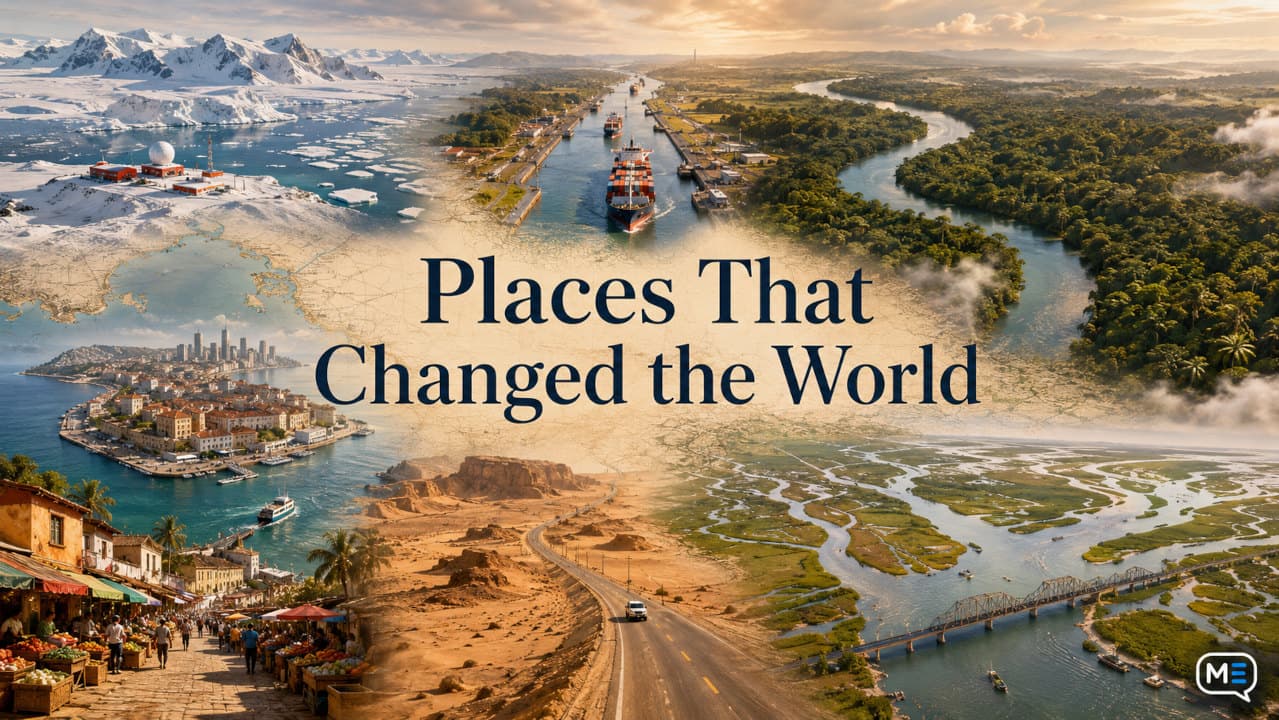



An intermediate place profile about the Amazon Rainforest as a living climate system, biodiversity home, and threatened place for people and the planet.
Читай текст у контексті й натискай підсвічені слова, щоб відкрити переклад, транскрипцію та дії зі словником.
Vocabulary:18(✓0+0-18)
knownlearningnew
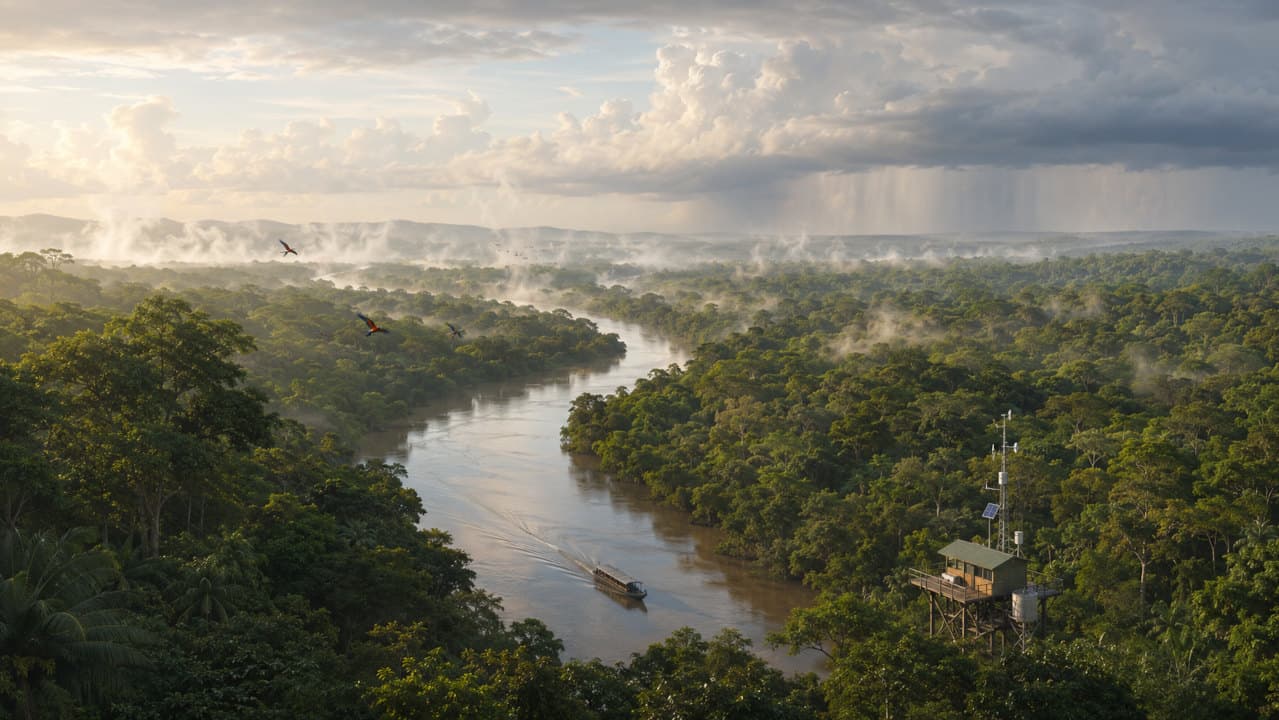
The Amazon Rainforest is not only a green area on a map. It is a that helps make its own weather. Trees pull water from the ground and release it into the air. That can become clouds and rain, moving across the forest and beyond it. In this way, the Amazon is not just a place that receives rain. It helps create rain.
The forest covers a huge part of the Amazon in South America. Brazil contains the largest share, but the rainforest also reaches into countries such as Peru, Colombia, Bolivia, Ecuador, Venezuela, Guyana, Suriname, and French Guiana. Rivers, s, forests, and cities are all part of the wider Amazon world.
The Amazon matters because of its . Britannica describes it as one of the richest biological s on Earth. The wider Amazon basin includes thousands of plant species, many kinds of birds, and millions of insects and other small life forms. Many species are still not fully by science. Losing forest can mean losing life before people even understand it.
The forest also matters for climate. Healthy trees carbon dioxide as they grow. They store carbon in trunks, branches, roots, and soil. This does not mean the Amazon can solve climate change by itself, but it is part of the global . When trees are cut or burned, stored carbon can return to the atmosphere and add to warming.
is one of the biggest pressures on the Amazon. Forest is cleared for , farming, roads, mining, logging, and . The pattern can look simple from far away: trees disappear and open land appears. Up close, it is more complex. Local people may need income, companies may want land, and governments may push development.
This complexity matters because easy answers often fail. Some families clear land because they need to survive. Some companies clear land because profit is easier than protection. Some roads bring schools and medicine, but they can also bring illegal logging and more fires. The Amazon is not a museum behind glass. It is a living region where choices have costs.
Indigenous peoples and local communities are central to the Amazon's future. Many communities have lived with the forest for generations, using its resources while also protecting large areas. Their , knowledge, and safety are not side issues. They are part of how the forest survives. A place can be globally important and still be someone’s home.
Research often shows that forests managed by Indigenous peoples can remain healthier than nearby unprotected areas. That does not mean communities should carry the whole responsibility for a global problem. It means protection works best when people who know the land have power, safety, and respect. The future of the Amazon is also a question of justice.
Scientists worry about a . If too much forest is lost and the climate becomes too dry, parts of the Amazon could a drier landscape. This would affect animals, plants, rainfall, farms, rivers, and people. NASA studies have also shown that parts of the atmosphere above the Amazon have been drying, especially where deforestation and are strong.
The forest's water cycle is one reason this risk is so serious. Trees release moisture through their leaves, and that moisture helps form rain. When many trees disappear, the system can become drier. Less rain can make fires more likely, and fires can damage even more forest. A local cut can become part of a larger chain reaction.
The Amazon is often called the lungs of the planet, but that phrase can be . Lungs breathe in and out; forests also absorb and release gases. A better image may be a water pump, a carbon store, and a home all at once. The forest moves moisture, holds life, stores carbon, and supports cultures. No single nickname is big enough.
This is why the Amazon matters to people far from South America. Weather, food prices, biodiversity, medicine, and climate are all connected to large natural systems. A person in another country may never visit the rainforest, but still live in a world shaped by it. The lesson is not that the Amazon belongs to everyone. It is that everyone is affected by what happens there.
Protecting the Amazon is not only about stopping destruction. It is also about building better choices: stronger land rights, careful farming, forest monitoring, , science, and political cooperation across borders. The Amazon changed the world because it helps shape weather, climate, and life far beyond its trees. Its future will also shape ours.
Обговорення
щоб коментувати, лайкати відповіді та скаржитися на коментарі.