An advanced article about the hidden human labor that supports artificial intelligence systems.
Основний текст
Читай текст у контексті й натискай підсвічені слова, щоб відкрити переклад, транскрипцію та дії зі словником.
Vocabulary:11(✓0+0-11)
knownlearningnew
Artificial intelligence is often described as if it appears from nowhere: a clean interface, a fast answer, a model that seems to understand language, images, and code. The public story focuses on algorithms, computing power, and breakthrough products. What receives far less attention is the human labor that makes many of these systems usable in the first place.
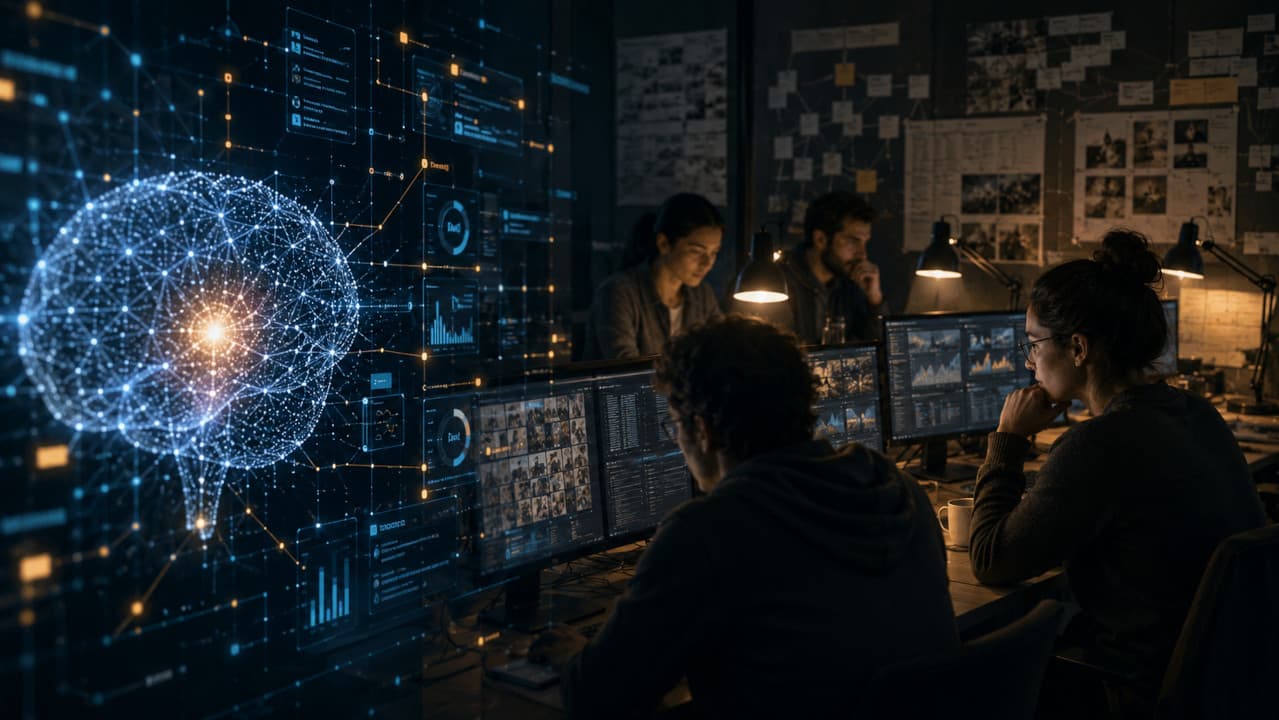
Behind AI there are people labeling images, checking outputs, writing examples, ranking answers, translating fragments, removing harmful content, and correcting mistakes that users may never see. Some of this work is highly skilled and well paid. Much of it is repetitive, emotionally difficult, and through layers of contractors. The machine looks autonomous partly because human effort has been made invisible.
is one of the clearest examples. A self-driving system needs images marked with pedestrians, traffic lights, lane boundaries, and unusual road situations. A language model may need examples of helpful answers, unsafe answers, factual corrections, or tone preferences. Each label looks small, but millions of small judgments can shape how a system behaves.
is even more difficult. Workers may review violent images, hate speech, scams, sexual exploitation, or self-harm material so that platforms and AI tools can appear safe to ordinary users. This labor protects the public interface, but it can harm the people doing it. Psychological support, fair pay, and transparency are often weaker than the moral importance of the work demands.
The invisibility of this labor supports a : . In that story, machines simply replace human workers. In reality, many automated systems rather than eliminate it. They move tasks into less visible places, divide them into smaller units, and make responsibility harder to trace. A user sees a smooth result; a worker somewhere else may have .
This matters for how societies evaluate productivity. If a company claims that AI has made a process efficient, we should ask which costs disappeared and which costs were displaced. Did the system genuinely reduce work, or did it move work to contractors with less ? Did it reduce harm, or did it concentrate harm among people paid to filter it?
There is also a knowledge problem. Data workers often understand model failures in a very practical way because they see repeated mistakes up close. Yet they may have little influence over product decisions. Their feedback can be treated as rather than expertise. This is wasteful as well as unfair. People who correct a system every day often know where it breaks.
The language used around AI can make the problem worse. Words like magic, intelligence, and autonomy invite users to imagine a system floating above ordinary labor. Even the phrase artificial intelligence can hide the fact that many systems are built through deeply human forms of judgment: deciding what counts as toxic, helpful, relevant, biased, or safe. These are not purely technical categories.
None of this means AI is fake or useless. It means the technology is social as well as . Servers, models, datasets, annotators, moderators, product managers, policy teams, and users all participate in the final behavior of a system. A serious conversation about AI should include this whole chain, not only the most glamorous link.
Better standards are possible. Companies can disclose more about data work, create stronger , pay contractors fairly, provide mental-health support for harmful-content review, and build channels for worker feedback. Regulators can ask about supply chains of data and moderation just as they ask about privacy and security. Researchers can cite labor conditions when they evaluate model quality.
The invisible labor behind AI is not a side issue. It is part of the technology itself. If a system depends on human judgment, then the people supplying that judgment deserve recognition, protection, and voice. Otherwise, society risks celebrating automation while hiding the workers who make automation appear effortless.
This hidden labor also complicates the way success is measured. A model may appear more capable after thousands of corrections, but the public may attribute the improvement only to architecture or scale. The people who corrected edge cases, translated ambiguous phrases, or flagged unsafe outputs disappear from the story. Their labor becomes part of the model's aura rather than part of its credits.
There are global inequalities here as well. Data work is often routed to places where wages are lower and labor protections are weaker. Workers may be asked to follow cultural rules created elsewhere, judging speech, images, or social cues from contexts they do not fully share. At the same time, their own working conditions may remain invisible to users in wealthier markets who enjoy the final product.
The problem is not only exploitation; it is accountability. When an AI system produces harm, companies may point to model complexity, user misuse, or imperfect data. But if many people contributed to training, filtering, and evaluating the system, responsibility becomes spread across a chain. Without transparency, it becomes too easy for powerful actors to benefit from distributed labor while denying distributed responsibility.
A more honest AI culture would change the story it tells about itself. It would still celebrate research, engineering, and creative applications, but it would also name the annotators, moderators, evaluators, and support workers who make systems safer and more usable. The future of AI ethics cannot be only about what machines can do. It must also be about what people are asked to endure so machines can appear intelligent.
Вправи
Перевірте розуміння тексту, ключову лексику та зміст уроку після читання.
Після перегляду визнач, чи правильне твердження
Визнач, чи твердження правдиві.
Щоб виконувати завдання, увійдіть в акаунт.
Вибери правильний варіант відповіді
Вибери правильну відповідь.
Щоб виконувати завдання, увійдіть в акаунт.
Обговорення
щоб коментувати, лайкати відповіді та скаржитися на коментарі.






Обговорення
щоб коментувати, лайкати відповіді та скаржитися на коментарі.