An advanced article about why repair culture is returning as a response to waste, cost, and fragile supply chains.
Основний текст
Читай текст у контексті й натискай підсвічені слова, щоб відкрити переклад, транскрипцію та дії зі словником.
Vocabulary:11(✓0+0-11)
knownlearningnew
For decades, modern consumer culture trained people to replace rather than repair. A cracked phone screen, a broken zipper, a slow laptop, or a leaking kettle often seemed like a signal to buy something new. Repair existed, but it was : too expensive, too inconvenient, or too difficult to arrange. Now that assumption is beginning to weaken.
The return of repair culture is not simply nostalgia for older, tougher objects. It is a practical response to economic pressure, environmental anxiety, and frustration with products that appear deliberately hard to fix. When prices rise and wages lag, throwing things away becomes less casual. When images of electronic waste circulate online, the becomes harder to ignore.
A changes the relationship between people and objects. Instead of seeing a product as a , a person starts asking what failed, which part can be replaced, and whether the object still has value. This does not mean everyone must become an engineer. It means ordinary users begin to recover a that passive consumption often removes.
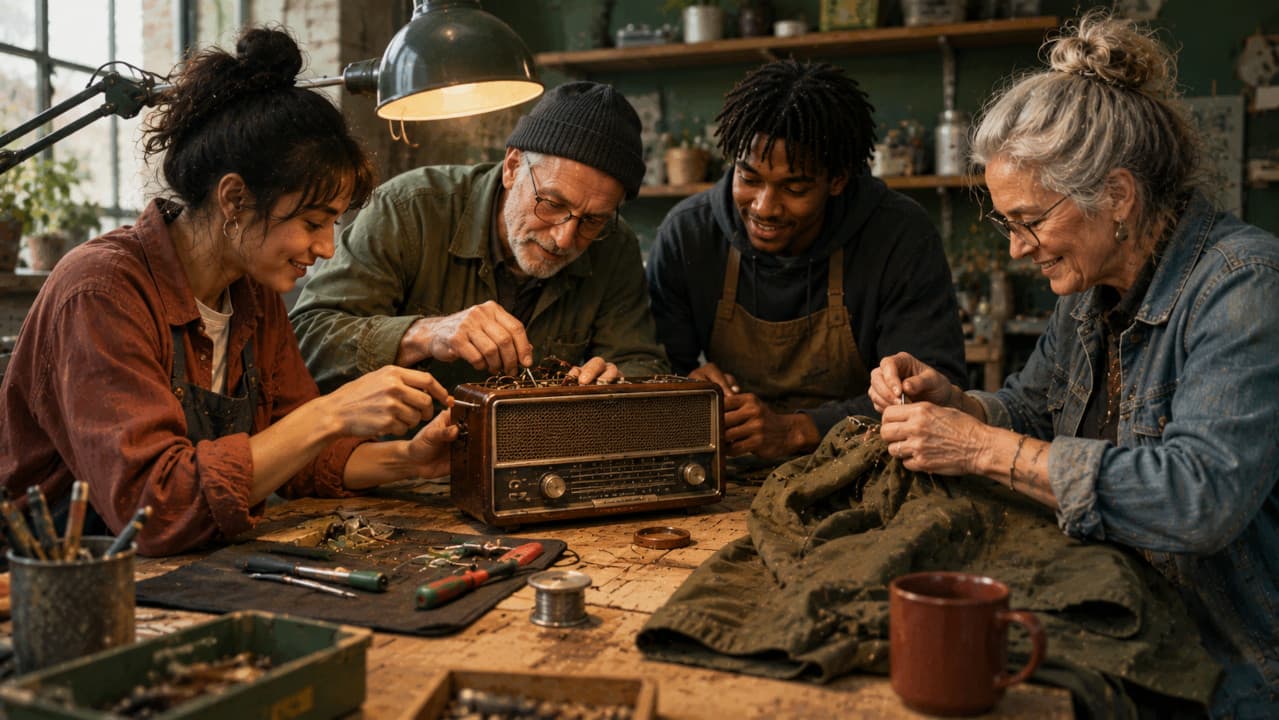
Community repair cafes show how this shift can become social. People bring lamps, jackets, radios, toys, and small appliances to a shared table. Volunteers help , teach basic skills, and sometimes fix the item on the spot. Even when an object cannot be saved, the owner often leaves with a clearer understanding of why it failed. That knowledge matters.
The movement has pushed the issue into politics. Advocates argue that companies should provide spare parts, manuals, diagnostic tools, and software access so independent repair is possible. Manufacturers often respond that complex products require safety controls and intellectual-property protection. The debate is real, but it also reveals a : ownership means less if users are legally or technically blocked from maintaining what they bought.
Design is another battleground. Some products are glued shut, use unusual screws, or pair replacement parts with software locks. These choices can be defended as sleek design, water resistance, or security. Yet they also shorten the life of devices and make independent repair uneconomical. A beautiful object that becomes useless after one small failure is not truly elegant. It is fragile convenience.
Repair culture also has limits. It should not become a moral performance that blames individuals for structural waste. A person cannot repair their way out of a global production system built on cheap materials, , and fast replacement cycles. Policy, corporate accountability, and better design standards matter more than heroic individual effort.
Still, personal repair has cultural force. When someone mends jeans, replaces a battery, sharpens a knife, or keeps an old bicycle running, they practice a different idea of value. The object is not valuable only because it is new. It is valuable because it serves a purpose, carries memory, or can be adapted. This challenges the emotional rhythm of consumer life, where desire is constantly redirected toward the next purchase.
Repair can also teach patience. Many digital services make action feel instant: click, order, replace, upgrade. Repair is slower. It asks for attention, tools, advice, and sometimes failure. That slowness can be annoying, but it can also be grounding. A repaired object reminds its owner that the material world has parts, histories, and consequences.
The future of repair will depend on whether it remains a niche hobby or becomes ordinary infrastructure. Cities can support tool libraries, repair workshops, vocational training, and public procurement rules that favor durable products. Schools can teach basic maintenance without treating it as less intelligent than abstract knowledge. Companies can design products that welcome repair rather than punish it.
Repair culture will not solve overconsumption by itself. But it can weaken the spell of . It shows that broken does not always mean finished, and old does not always mean obsolete. In a world shaped by waste, fragile supply chains, and rising costs, the ability to fix things is not only practical. It is a quiet form of .
There is also an educational dimension. Repair teaches systems thinking in a direct, physical way. A child who opens a broken toy learns that objects have parts; an adult who replaces a phone battery learns that convenience often hides design decisions. These lessons are modest, but they change the way people look at the material world. The question shifts from “Should I buy another one?” to “What exactly stopped working?”
Repair can strengthen local economies too. A neighborhood with tailors, cobblers, bicycle mechanics, electronics technicians, and tool-sharing groups keeps money circulating close to home. It also preserves skills that disappear when replacement becomes the default. Those skills are not merely quaint. They become valuable when supply chains slow, imports become expensive, or households need cheaper ways to keep daily life functioning.
The movement also exposes class tensions. Wealthier consumers can sometimes turn repair into an ethical lifestyle choice, complete with workshops, stylish mended clothes, and expensive durable brands. Poorer households may have repaired things for years because replacement was never easy. A serious repair culture should recognize that history instead of presenting repair as a fashionable discovery by people with more options.
The most useful version of repair culture is therefore practical, not romantic. It does not pretend every object can or should be saved. It asks which products deserve longer lives, which designs make maintenance possible, and which policies stop companies from turning ownership into dependence. Repair is not a retreat from modernity. It is a demand that modern objects respect the people who use them.
Вправи
Перевірте розуміння тексту, ключову лексику та зміст уроку після читання.
Після перегляду визнач, чи правильне твердження
Визнач, чи твердження правдиві.
Щоб виконувати завдання, увійдіть в акаунт.
Вибери правильний варіант відповіді
Вибери правильну відповідь.
Щоб виконувати завдання, увійдіть в акаунт.
Обговорення
щоб коментувати, лайкати відповіді та скаржитися на коментарі.






Обговорення
щоб коментувати, лайкати відповіді та скаржитися на коментарі.