An advanced article about how cities adapt to hotter weather and why heat is also a social problem.
Основний текст
Читай текст у контексті й натискай підсвічені слова, щоб відкрити переклад, транскрипцію та дії зі словником.
Vocabulary:11(✓0+0-11)
knownlearningnew
Heat is one of the most underestimated climate risks because it is quiet. A flood breaks windows, carries cars, and produces dramatic images. A often arrives as a forecast, a heavy afternoon, and a night when sleep becomes difficult. Yet extreme heat kills, weakens infrastructure, reduces productivity, and exposes the of cities.
Urban heat is not distributed evenly. Neighborhoods with many trees, parks, and light-colored surfaces can be several degrees cooler than neighborhoods dominated by asphalt, dark roofs, traffic, and dense buildings. This difference is not accidental. It often reflects decades of housing policy, investment patterns, and . Heat follows inequality.
The makes the problem worse. Concrete and asphalt during the day and release it slowly at night. Air conditioners cool indoor spaces but push waste heat outside and increase electricity demand. When nights stay hot, the human body has less time to recover, especially for older adults, outdoor workers, infants, and people with chronic illness.
Adaptation begins with measurement. Cities need detailed heat maps, not only general weather data. A single official temperature can hide the fact that one block is bearable while another is dangerous. Mapping helps governments decide where to plant trees, install shade, open , or change building rules. Without local data, adaptation can become symbolic rather than effective.
Trees are one of the most visible solutions, but they are not simple decoration. A mature tree can shade streets, cool nearby air, reduce stormwater , and make walking more pleasant. However, tree planting requires maintenance, water, soil space, and patience. If a city plants young trees for a photo opportunity and then fails to care for them, the policy becomes theatre.
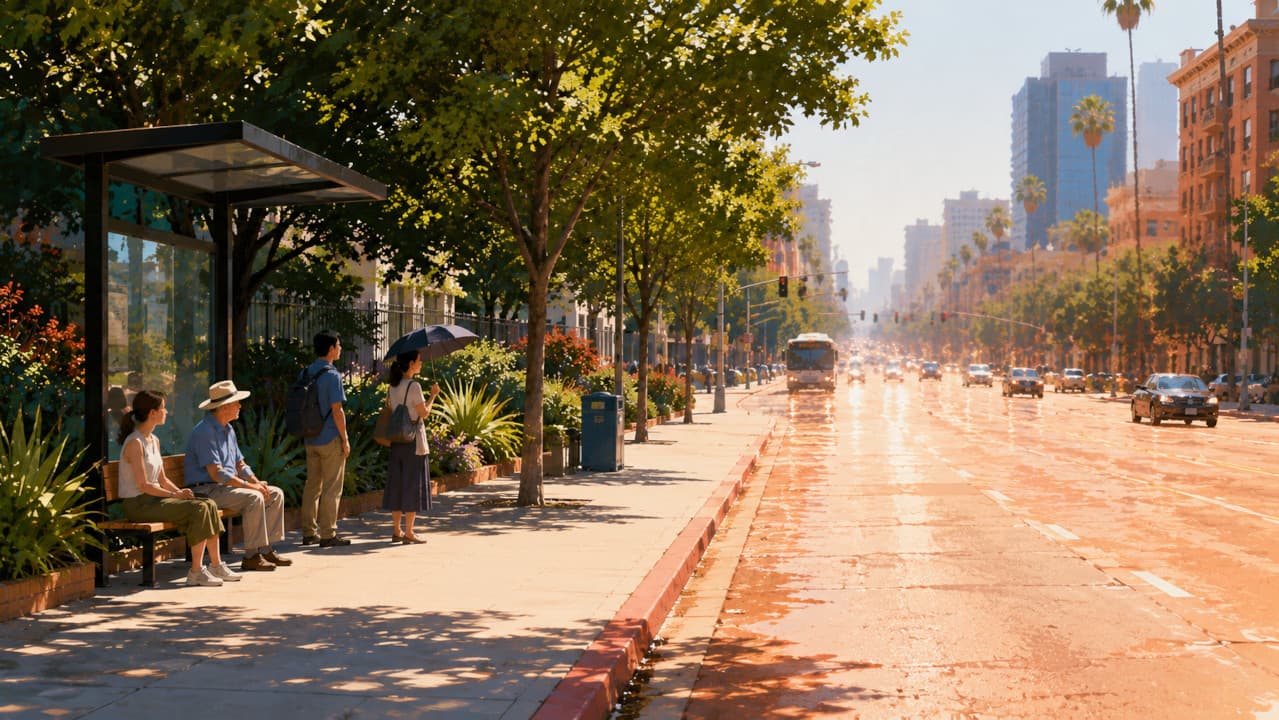
Shade is equally important. Bus stops, school yards, playgrounds, markets, and walking routes need protection from direct sun. In many cities, people who rely on public transport spend more time waiting outside than car owners do. A shaded bus stop is therefore not a minor comfort. It is a .
Buildings also need to change. Better insulation, reflective roofs, ventilation, and can reduce dependence on air conditioning. The challenge is that many renters cannot modify their homes, and low-income households may fear high electricity bills even when cooling is medically necessary. Heat adaptation must therefore include , energy assistance, and minimum housing standards.
Public communication matters too. Heat warnings often sound less urgent than storm warnings, even when the risk is severe. A useful heat plan tells people where to go, whom to check on, what symptoms to watch for, and how to stay safe without assuming everyone has a cool home, flexible work schedule, or private car. Advice that ignores real living conditions is not advice; it is wishful thinking.
Some cities are creating cooling networks: libraries, community centers, pools, shaded corridors, misting areas, and extended evening hours for public facilities. The best networks are easy to find and socially welcoming. If a cooling center feels humiliating, unsafe, or hard to reach, many people will not use it. Design and dignity belong together.
The politics of heat adaptation can be difficult because success is often invisible. If fewer people get sick, if a street becomes walkable, or if a building stays cooler, there may be no dramatic headline. Prevention rarely looks heroic. But in a hotter world, may save more lives than emergency spectacle.
Cities cannot air-condition their way out of climate change. They need fewer emissions, better land use, greener streets, stronger housing rules, and public spaces designed for bodies under stress. Learning to live with heat means treating temperature as a social condition, not just a weather number. The question is not only how hot a city gets, but who has the power, money, and infrastructure to survive that heat with dignity.
Work is a major part of the heat story. Delivery riders, construction workers, street vendors, cleaners, gardeners, and agricultural workers cannot simply move their labor into an air-conditioned room. If cities treat heat as a private comfort issue, these workers become invisible. Heat rules need to include rest breaks, water access, shade, schedule changes, and protection from retaliation when conditions become unsafe.
Schools also reveal the social nature of heat. A classroom without cooling can make learning harder, especially during exams or long afternoons. Children may become tired, irritable, or unable to concentrate. If wealthier schools can install cooling and poorer schools cannot, heat quietly widens educational inequality. Climate adaptation is therefore not only an environmental policy; it is also education policy.
There is a risk that adaptation itself becomes unequal. Green neighborhoods may become more attractive and expensive, pushing lower-income residents away from the very improvements meant to protect them. This is why heat policy must connect with housing affordability. A cooler street is a success only if the people who endured the hotter street can remain there and benefit from the change.
The deeper lesson is that heat forces cities to think in systems. Trees need water and maintenance. Cooling centers need transport and trust. Housing rules need enforcement. Public warnings need local languages and practical instructions. No single intervention is enough. But when many small systems work together, a city becomes less brittle, and heat becomes a shared challenge rather than a private emergency.
This is why the best heat plans are tested before the crisis, not during it. A city that waits for the hottest week to discover broken fountains, closed libraries, or confusing alerts has already failed the people most at risk.
Вправи
Перевірте розуміння тексту, ключову лексику та зміст уроку після читання.
Після перегляду визнач, чи правильне твердження
Визнач, чи твердження правдиві.
Щоб виконувати завдання, увійдіть в акаунт.
Вибери правильний варіант відповіді
Вибери правильну відповідь.
Щоб виконувати завдання, увійдіть в акаунт.
Обговорення
щоб коментувати, лайкати відповіді та скаржитися на коментарі.






Обговорення
щоб коментувати, лайкати відповіді та скаржитися на коментарі.