


Читай текст у контексті й натискай підсвічені слова, щоб відкрити переклад, транскрипцію та дії зі словником.
Vocabulary:18(✓0+0-18)
knownlearningnew
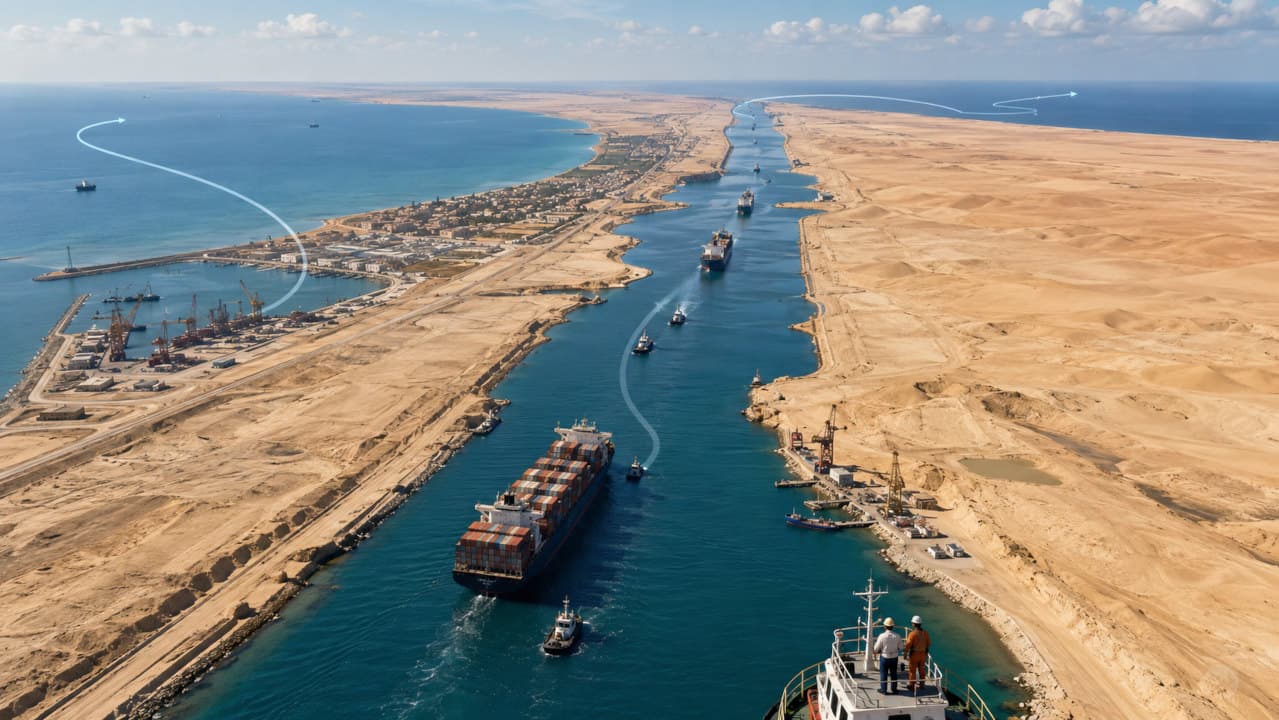
On a map, the Suez looks almost too thin to matter. It is a narrow line through Egypt, the Mediterranean Sea with the Red Sea. Yet this line changed how ships move between Europe and Asia. Before the modern canal opened, many ships had to sail around the of Africa, a much longer and more expensive journey.
The canal opened in 1869 after about ten years of . It crossed the Isthmus of Suez, a strip of land that had attracted canal builders and rulers for centuries. The modern project was shaped by Egyptian labor, French capital, European ambition, and the politics of empire. From the beginning, it was not only an . It was also a question of .
The basic idea was simple: the . A ship traveling from the Mediterranean to the Indian Ocean could pass through the canal instead of going around Africa. That saved time, fuel, and money. Over time, the canal became one of the most important s in the world, especially for trade between Europe, the Middle East, and Asia.
The Suez Canal Authority says that about 12 percent of the world’s passes through the canal. That number can change from year to year, but it shows why the canal matters. Clothes, electronics, oil, grain, car parts, and many other goods may all ships moving through this narrow place. A local waterway can become a global system.
This is why the canal is often called a . A chokepoint is a narrow place where movement can slow down or stop. If the route is open, trade feels normal and almost invisible. If it is blocked, the world notices quickly. The 2021 Ever Given showed this clearly when one large container ship stopped traffic for several days and delayed cargo around the world.
The blockage was a simple image with a big meaning: one ship across one narrow channel. Around the world, companies waited for parts, stores waited for goods, and ports had to adjust schedules. Many people who never thought about the Suez Canal suddenly saw how their everyday products were connected to a place in Egypt. Geography became visible through delay.
The canal also matters deeply to Egypt. Ships pay fees to pass through it, so the canal brings important . Cities such as Port Said, Ismailia, and Suez are connected to its work. Pilots, tug crews, engineers, office workers, and port workers all make the route function. The canal is not just water between two seas. It is labor, technology, and daily coordination.
For workers on and near the canal, global trade is not an abstract idea. It is a schedule, a radio message, a tugboat, a night shift, or a repair job. A ship may carry goods between continents, but it still needs local knowledge to pass safely. This human layer is easy to miss when people talk only about maps and percentages.
Still, the Suez Canal has always carried political tension. Britain, France, Egypt, and other powers all treated the canal as strategically important. In 1956, Egypt’s president Gamal Abdel Nasser nationalized the canal, leading to the Suez Crisis. The event showed that the canal was not simply a useful shortcut. It was a symbol of , empire, and changing power after World War II.
The crisis also changed how many countries understood old imperial power. Egypt wanted control over a canal on its own territory. Britain and France wanted to protect influence and access. The conflict became a sign that the world after World War II was not the same as the world before it. A waterway became a stage for a new political era.
Today, the canal faces new pressures. Ships are larger, s are more connected, and conflicts near the Red Sea can affect traffic. When companies avoid the route, some ships travel around Africa again. That adds days to journeys and . The old map problem returns: distance still matters, even in a world of fast communication.
There are also environmental questions. Shorter routes can save fuel, but shipping still produces pollution, and canal operations need constant management. The Suez Canal Authority has promoted green-canal projects, but the larger shipping system remains difficult to clean. The canal shows a modern trade problem: speed, cost, safety, and climate do not always point in the same direction.
The Suez Canal changed the world because it made faraway markets feel closer. It helped goods move faster, but it also made global trade depend on one narrow route. That is the lesson of Suez: infrastructure can connect the world and make it at the same time. A line on a map can carry the weight of many economies.
Обговорення
щоб коментувати, лайкати відповіді та скаржитися на коментарі.