



G
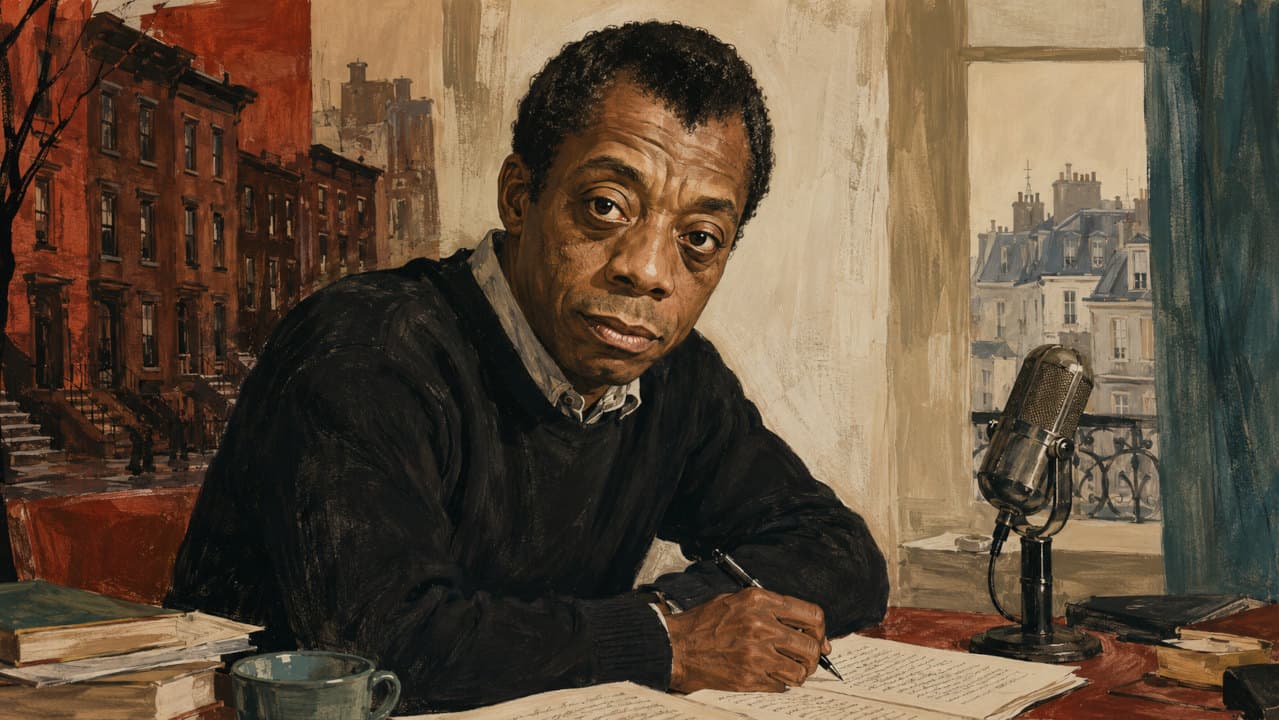
Джеймс Болдвін: відстань, з якої стала видимою Америка
A narrative Advanced profile of James Baldwin, who used exile, argument, fiction, and moral attention to expose the stories America told about itself.
Читай текст у контексті й натискай підсвічені слова, щоб відкрити переклад, транскрипцію та дії зі словником.
In February 1965, James Baldwin stood before the Cambridge Union to debate whether the American dream had been achieved at the expense of Black Americans. His opponent was conservative writer William F. Buckley Jr. Baldwin brought something harder to classify: a witness's power to turn a national argument into a personal reckoning.
He did not treat racism as a collection of rude attitudes that better manners could fix. He described a country built from labor it refused to value and history it preferred not to remember. The students gave him a standing ovation, but victory in the room was not the point. Baldwin's deeper subject was the cost of winning an argument while the conditions that produced it remained.
By then he had lived between Harlem, Paris, Istanbul, and the American South. Distance had made him more, not less, involved in the United States. Each departure sharpened the view on return. Baldwin became an exact reader of American identity because he never accepted that belonging required obedience.
Перевірте розуміння тексту, ключову лексику та зміст уроку після читання.
Визначте, чи відповідають твердження тексту.
Щоб виконувати завдання, увійдіть в акаунт.
Виберіть правильну відповідь.
Заповніть пропуски словами з тексту.
Поєднайте етап життя з його значенням у статті.

The Invisible Labor Behind AI


Обговорення
щоб коментувати, лайкати відповіді та скаржитися на коментарі.