An advanced article about a viral Monet experiment, AI labels, online judgment, and why context can change what people think they see.
Основний текст
Читай текст у контексті й натискай підсвічені слова, щоб відкрити переклад, транскрипцію та дії зі словником.
Vocabulary:10(✓0+0-10)
knownlearningnew
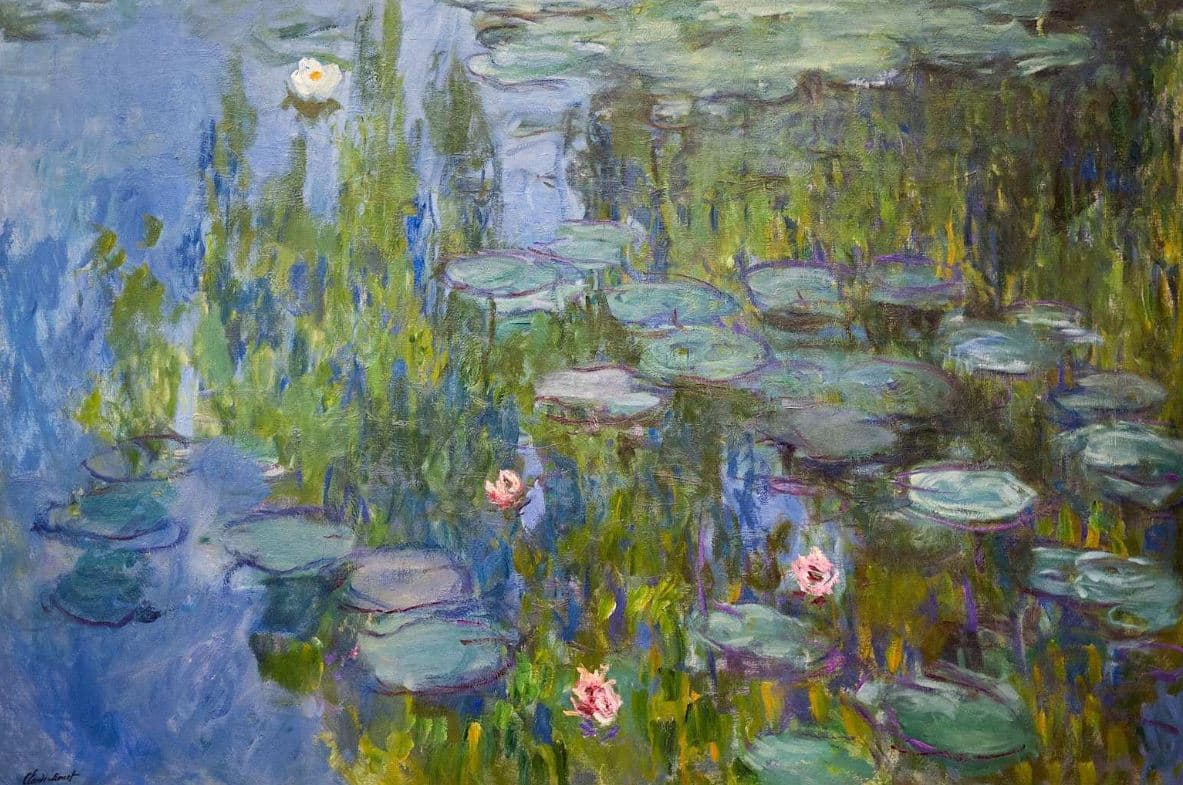
A strange online experiment recently in the way people judge images. A real painting by Claude Monet was posted on X with an AI label, and many viewers treated it as proof that artificial intelligence produces empty, defective art.
The image came from Monet’s Water Lilies world, a body of work associated with late Impressionism, soft color, broken reflections, and a deliberately unstable surface. Yet once the post framed the picture as , some critics began to see familiar “AI mistakes” everywhere.
They complained about strange texture, weak composition, unnatural details, and a lack of artistic intention. Some of those observations may sound sophisticated , but the reveal made them look less like careful looking and more like .
The point is not that every criticism was foolish. Digital reproductions are imperfect, cropped images lose context, and Monet himself was not trying to paint photographic realism. A viewer can dislike a painting honestly. The problem appears when certainty arrives before attention.
Labels are powerful because they tell us what kind of object we think we are seeing. If a picture is labeled as a museum masterpiece, people may search for depth. If the same picture is labeled as AI output, they may search for defects.
This effect is familiar beyond art. A cheap wine can taste better when people believe it is expensive. A plain product can seem more reliable when it carries a trusted brand. The label does not create every reaction, but it directs attention toward some features and away from others.
That is why the Monet example felt so sharp. Many online critics did not simply say, “I dislike this image.” They described defects as if the label had already solved the mystery. The caption gave them a conclusion, and the eyes began collecting evidence for it.
This does not prove that AI art is equal to Monet. It proves something more uncomfortable: online judgment is often shaped by identity, speed, and . People want to be seen as discerning, ethical, and on the right side of a cultural argument.
The experiment also reveals a deeper problem for the internet. As synthetic media improves, becomes more important. Viewers need to know where an image came from, who made it, and whether it has been . But provenance is not the same as taste.
A verified human source does not automatically make a work beautiful, and an AI label does not automatically make an image . The label should change ethical and legal questions, especially around consent and training data, but it should not replace visual attention.
The Monet incident spread because it embarrassed a certain kind of confident online criticism. Screenshots showed people finding “obvious” machine errors in a painting that existed long before modern generative tools. The comedy was sharp, but the point is broader than .
Modern platforms reward fast reactions. A careful answer often arrives too late to get attention, while a confident answer can travel widely even when it is wrong. In debates about AI, this creates a noisy environment where suspicion can become performance.
There is also a difference between detecting origin and judging quality. A person might correctly notice that an image was generated by a model and still say something shallow about it. Another person might misidentify the origin but offer a serious reading of color, rhythm, or mood.
This distinction matters because the internet often treats detection as the highest form of expertise. People gain status by saying they can “spot” AI immediately. But spotting is not the same as understanding, and suspicion is not the same as criticism.
For artists, the episode is painful because the fear behind the reactions is real. Many people worry that creative labor is being copied, devalued, or replaced. Those concerns deserve serious discussion. But serious discussion needs better habits than guessing from a label.
For museums, teachers, journalists, and platforms, the story points toward a more practical question: how can audiences learn to evaluate images without falling into instant tribal reactions? The answer will probably include clearer labeling, better source information, and stronger visual literacy.
Visual literacy does not mean trusting every image. It means slowing down enough to ask different questions. What is visible? What is known? What is assumed? What does the label prove, and what does it merely suggest?
The healthier response is slower looking. Ask what you can actually see. Ask what you know about the source. Separate from ethical judgment. And when the internet invites you to be instantly certain, remember that even a Monet can become “obviously AI” if the caption tells people what to believe.
The challenge is not to become neutral machines. People have values, histories, and worries, and those things influence interpretation. The goal is to notice when interpretation becomes automatic and when a label is doing more work than the artwork itself.
In a classroom, this story could become a useful exercise. Students could first describe the image without knowing the source, then read the label, then compare how their language changes. The result would not solve the AI art debate, but it would make the mechanics of judgment easier to see.
The same habit matters in news, politics, advertising, and everyday social media. A headline, a username, or a small platform label can push the mind toward trust or suspicion before the evidence has been examined. The Monet prank was about art, but its warning belongs to the whole attention economy.
Вправи
Перевірте розуміння тексту, ключову лексику та зміст уроку після читання.
Після перегляду визнач, чи правильне твердження
Визнач, чи твердження правдиві.
Щоб виконувати завдання, увійдіть в акаунт.
Вибери правильний варіант відповіді
Вибери правильну відповідь.
Щоб виконувати завдання, увійдіть в акаунт.
Обговорення
щоб коментувати, лайкати відповіді та скаржитися на коментарі.






Обговорення
щоб коментувати, лайкати відповіді та скаржитися на коментарі.